
45 ft Containers in Columbus
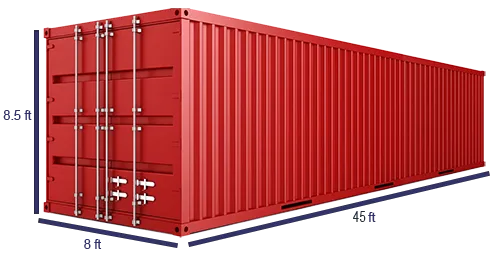
Need extra length? 45-foot containers may be the right solution for you, but our standard 40-foot containers deliver high-capacity storage at a fraction of the cost and lead time. Request a free quote today to check local inventory!

Popular Storage Container Uses
30-foot containers offer a unique solution for businesses and individuals with specific space requirements. While not used for global transportation, they are particularly beneficial for applications that demand a tailored approach, including:


Common Storage Container Sizes
Storage containers come in three standard lengths with 20 and 40 foot being the most common. While you can have one modified to produce a 30 foot, we'd recommend choosing one of these common options for cost and availability purposes.


While 45-foot shipping containers are a standard ISO size widely used in logistics, they are less common in general storage and secondary markets compared to the ubiquitous 20-foot and 40-foot units. Because 45-foot containers offer extended capacity over traditional options, they are often produced in lower quantities, making them harder to source and typically more expensive to acquire and transport.
Due to their extra length and specialized handling requirements, 45-foot containers can incur higher delivery costs and require larger footprints for placement. Despite the premium price and reduced availability compared to standard 20-foot and 40-foot models, 45-foot shipping containers provide an exceptional high-volume storage solution for projects that require maximum cargo capacity without jumping to multiple smaller units.